What Is Digital Marketing? A Complete Guide for Beginners
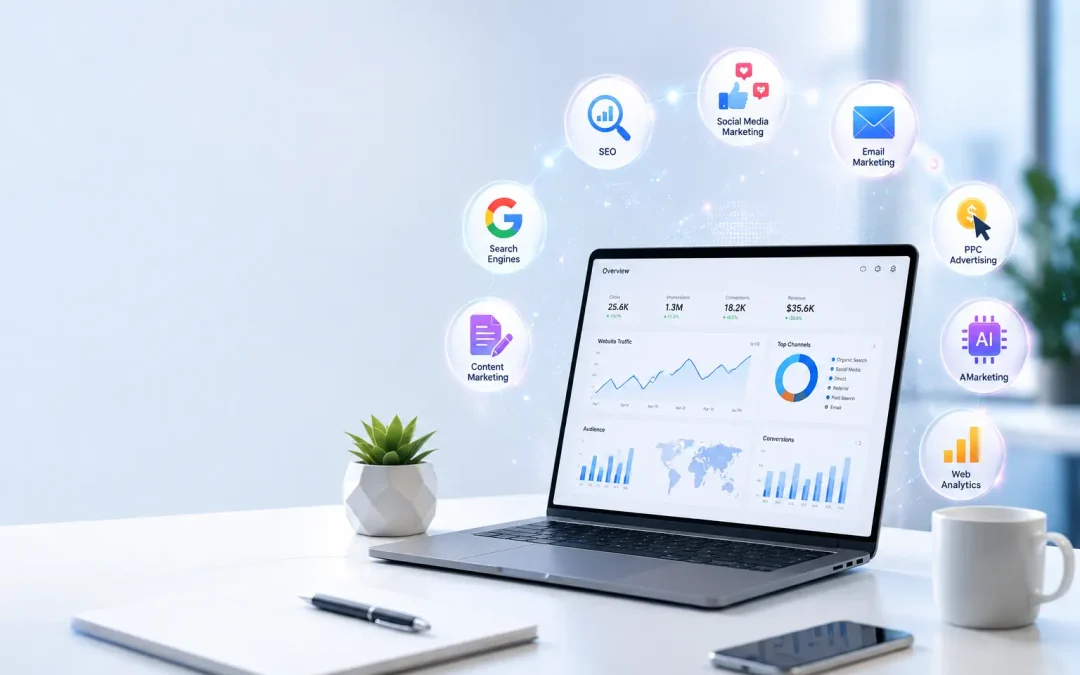
Digital marketing is the practice of promoting products or services through online channels such as search engines, social media, websites, email, and paid advertising. It helps businesses reach the right audience, increase brand awareness, generate quality leads, and boost sales. Unlike traditional marketing, digital marketing provides real-time insights into customer behavior and campaign performance, enabling businesses to optimize their strategies and achieve better results with a higher return on investment (ROI).
Types of Digital Marketing
Some of the most popular digital marketing strategies include:
Search Engine Optimization (SEO): Improves your website’s visibility on search engines like Google.
Content Marketing: Creates valuable content such as blogs, videos, and infographics to attract customers.
Social Media Marketing (SMM): Promotes your business on platforms like Facebook, Instagram, LinkedIn, and YouTube.
Pay-Per-Click (PPC): Uses paid advertisements to generate immediate website traffic.
Why Is Digital Marketing Important?
Digital marketing offers several benefits for businesses of all sizes:
Expands your online reach
Generates high-quality leads
Provides measurable results through analytics
Delivers cost-effective marketing solutions
Increases sales and business growth
Latest Digital Marketing Trends (2026)
To stay competitive, businesses should keep up with the latest trends, including:
AI-powered marketing and automation
Voice search optimization
Short-form video content
Personalized customer experiences
Local SEO and Google Business Profile optimization
Digital marketing has become an essential part of business growth in today’s competitive market. By using the right combination of SEO, content marketing, social media, email marketing, and paid advertising, businesses can reach more customers, strengthen their online presence, and achieve long-term success. Staying updated with the latest digital marketing trends will help businesses remain competitive and continue growing in the digital age